How To Get A Fake 1 Star Review Removed (10 Day Service) — Professional Service by Link Removal From Search
Last updated · Reviewed by the Link Removal from Search team
We remove fake, competitor and policy-violating 1-star reviews at the source — then clear them from Google and AI search results. You pay only for a successful removal.
How to Get a Fake 1-Star Review Removed (10-Day Service)
If you’re dealing with unwanted content appearing in search results, you’re not alone. Our specialist team handles hundreds of cases each year, helping individuals and businesses achieve a cleaner online presence.
Understanding Your Options
Every case is different. The right approach depends on what type of content is involved, where it’s hosted, and what outcome you need. We start every engagement with a thorough assessment before recommending any action.
What We Can Do
From direct removal requests to legal notices, Google delisting, and strategic suppression, we apply the most effective tools available. Our team has specialist knowledge of both UK law and the technical workings of search engines.
Take the First Step
The sooner you act on a reputation problem, the more options you have. Contact us for a free, confidential assessment of your situation and honest advice on what’s achievable.
Can you actually get a fake 1-star review removed?
Short answer: Yes — when you can show it breaks a specific rule the platform has already published. No major review site removes a rating for being harsh, or for costing you business. What comes down is a review that is fake, written by someone with no genuine experience of you, posted by a competitor or former employee, off-topic, or in breach of the site’s content rules.
Almost every failed removal attempt fails the same way: the business writes in arguing that the review is untrue. Platforms do not adjudicate truth. They have no way to referee your account against a stranger’s, and they will not try. What they can check is whether a review breaks a rule they have written down — so that is the only argument that moves anything.
How do you prove a 1-star review is fake?
Short answer: With records, not assertion. A removal case is assembled from evidence: no matching booking, order or account; a reviewer profile that has left one-star ratings on several unconnected businesses the same day; wording that describes a service you do not offer; or a timestamp that lines up with a dispute rather than a visit.
You do not have to prove the reviewer lied. You have to give the moderator something checkable. A report that says “this never happened” is one person’s word. A report that says “this reviewer names a delivery service we have never operated, and no order exists under any matching name, email or postcode” is a fact the moderator can verify without leaving their desk.
The reviewer profile
One-star ratings scattered across unrelated businesses, often on the same day, frequently with no photo and no other activity. Review-bombing and paid campaigns leave this fingerprint.
No record of a transaction
No booking, invoice, order number or account matching the name, email or dates given. For most businesses this is the fastest evidence to assemble.
The timing
A one-star review that appears hours after a refund refusal, a dismissal, or a dispute with a competitor is rarely a coincidence, and the sequence is documentable.
Content that does not match
The review describes a product, location or service you do not provide — the clearest sign it belongs to a different business, or to nobody at all.
Duplicated wording
The same text, or near-identical text, appearing across Google, Trustpilot and Facebook points to a coordinated campaign rather than an individual customer.
What Google, Trustpilot, Yelp and Facebook will actually remove
Short answer: Each publishes its own rules and they are not the same. Google removes content that breaches its prohibited and restricted content policies. Trustpilot requires a review to rest on a genuine service experience. Yelp is the most resistant of the four and refuses most business-led requests. Facebook applies Community Standards to recommendations.
Choosing the wrong platform’s language is one of the quiet reasons reports get refused. A ground that works on Trustpilot does not exist on Yelp. Before anything is filed, the review has to be matched to the exact policy clause on the exact platform it sits on.
Google Business Profile
Removes spam and fake engagement, off-topic content, conflicts of interest such as reviews from competitors or ex-employees, harassment, and personal information. It does not remove a review for being negative, and it will not arbitrate a factual dispute.
Trustpilot
A review must be based on a genuine buying or service experience. Businesses can flag a review and supply evidence, and Trustpilot will ask the reviewer to verify. Reviews that are promotional, harmful, or about a different company are removed.
Yelp
The hardest of the four. Yelp publicly refuses to remove reviews simply because a business disputes them, and it penalises attempts to solicit or suppress reviews. Removal comes through clear Content Guideline breaches and conflicts of interest.
Facebook and Meta
Recommendations are governed by Community Standards. Spam, coordinated inauthentic behaviour, hate speech and harassment are removed. A one-star recommendation with no text is harder, and usually needs the conflict-of-interest route.
How to report a fake 1-star review, step by step
Short answer: Flag it once, against one named rule, with your evidence attached. Do not send several grounds at the same time and do not reply publicly first. The report is assessed against the rule you cite, so the choice of ground is effectively the whole submission.
The order matters more than most businesses expect. A public reply that argues with the reviewer is read by the moderator as a dispute between two parties, which is exactly the thing platforms refuse to judge. Report first, in private, on one clean ground.
How long does it take to get a fake 1-star review removed?
Short answer: A first platform decision usually lands within a few days to about two weeks. Clear-cut cases finish there. Where the first report is refused, escalation and the legal routes take longer, and clearing the cached result out of Google adds a few days on top.
Anyone quoting you a guaranteed 24-hour removal on a contested review is describing something other than the platform process. What can be fast is the preparation — and a well-prepared first report is the single biggest influence on how long the whole thing takes, because a refusal roughly triples the timeline.
What will not get a 1-star review removed
Short answer: An honest bad experience. If a real customer had a genuinely poor time and described it without breaking a content rule, no platform will take it down and no credible service will claim otherwise. Being straight about this is what separates a removal service from a company that takes your money and files a report it knows will fail.
This matters commercially, not just ethically. Businesses waste months and budget chasing reviews that were never removable, while the ones that genuinely breach policy sit untouched. Knowing which is which on day one is most of the value.
It is simply negative
A low rating is not a policy breach. Platforms protect negative reviews deliberately — that is the product.
You dispute the facts
“That is not what happened” is a conflict of accounts. Moderators cannot resolve it and will not try.
It is anonymous
Anonymity is permitted almost everywhere. A review is not removable for being unsigned; it is removable for what it contains or who wrote it.
It damaged your rating
Commercial harm is the reason you want it gone. It is not, by itself, a ground any platform recognises.
The review is deleted, so why does it still show on Google?
Short answer: Because nothing has told Google the page changed. The old title, the star rating and the snippet can keep appearing for weeks after the review itself is gone, since the index only refreshes when the URL is recrawled or a removal request forces it.
This is the step almost every business skips, and it is why people conclude that removal “did not work”. Two things have to happen, in order: the review has to genuinely be gone at the source, and then the cached result has to be cleared. A review hidden behind a filter is not a removed review, and the index will not refresh on a page that still serves the content.
What one fake 1-star review costs a business
Short answer: More than the rating drop suggests, and almost invisibly. A one-star review does its damage at the moment someone is deciding whether to contact you at all — and nobody tells you they read it, or that it is the reason they went elsewhere.
The cost is not the average. It is the star rating shown beside your name in search results, the screenshot a competitor forwards to a prospect, and the question a buyer asks your sales team three months later. None of it appears in your analytics.
It appears beside your name
Review ratings surface in search results next to your business, so the damage is done before anyone reaches your website.
It arrives at the decision point
Reviews are read at the end of the buying process, when someone is close to committing. A doubt introduced there is expensive.
It gets reused
One damaging review is screenshotted, quoted by competitors, and cited back to you long after the original has scrolled out of view.
AI answers repeat it
Assistants summarising your business pull from the same public sources. A prominent fake review can be repeated as fact in an answer no one ever sees you correct.
Can a Negative 1-Star Review Harm Your Business Reputation?
Short answer: Yes, and out of all proportion to its size. A single 1-star review pulls down the star rating shown beside your business name in Google results, so it is costing you enquiries before anyone reaches your website. It is also read at the exact moment a buyer is deciding whether to contact you at all.
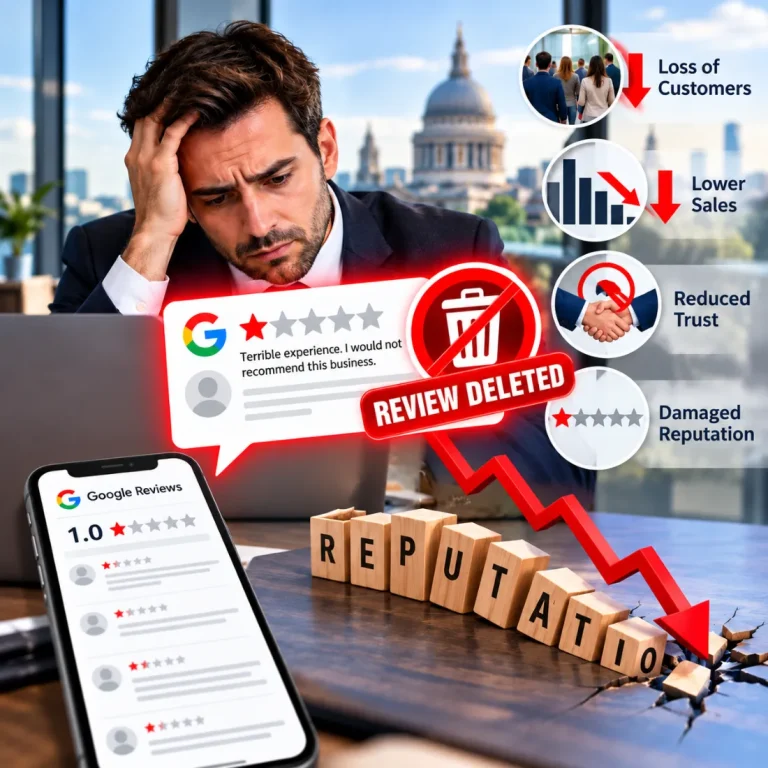
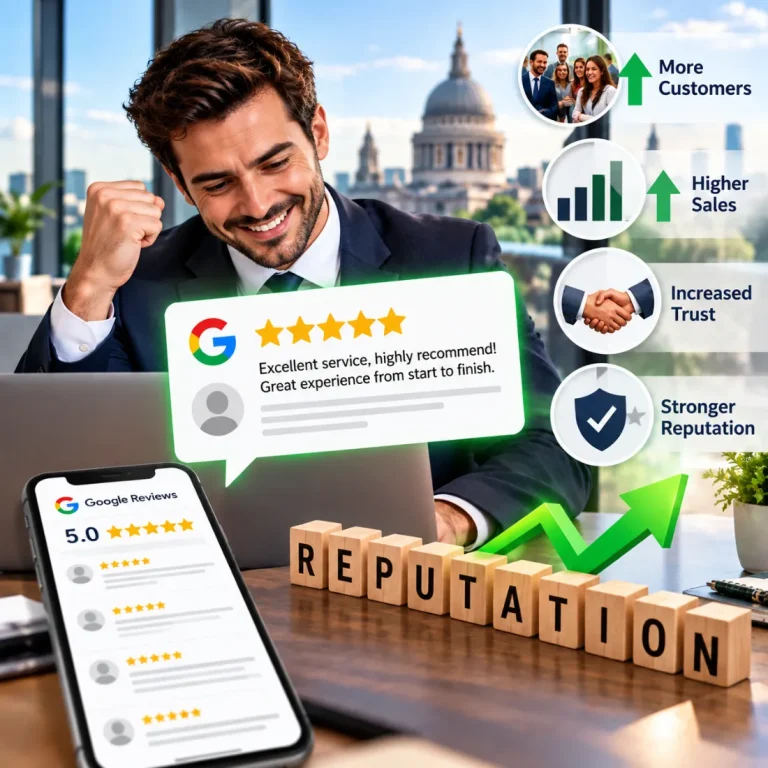
The harm from a negative 1-star review is almost entirely invisible in your own reporting. Nobody emails to say they read it. Nobody tells your sales team it is the reason they chose a competitor. What you see is a slow softening in enquiries that is easy to blame on the market, while the actual cause is sitting in the search result for your own company name.
It shows in the search result
Star ratings surface directly in Google next to your business, on Maps and in local packs. A dropped rating is visible to every person searching your name, not only to people who open the review site.
It lands at the decision point
Reviews are read at the end of the buying process, when someone is close to committing. A doubt introduced there is far more expensive than one introduced at the start.
It affects hiring and partners
Candidates, suppliers and prospective partners check reviews as routine due diligence. A visible 1-star review changes the terms of a conversation before it starts.
AI assistants repeat it
Answer engines summarising your business draw on the same public review sources. A prominent negative review can be restated as fact in an answer you never see and cannot correct.
It gets reused
One damaging review is screenshotted, quoted by competitors and cited back to you months later, long after the original has scrolled out of view.
It invites more
A visible unanswered 1-star review signals that your profile is an easy target, and review-bombing campaigns tend to build on whatever is already there.
Does linkremovalfromsearch.com Remove AI-Generated Negative Reviews?
Short answer: Yes, where the review breaches a policy rule — but we want to be precise about this. Being written by AI is not itself a ground for removal on any major platform. What gets an AI-generated negative review deleted is proving the underlying breach: no genuine transaction, a conflict of interest, or a coordinated posting pattern.
We will not tell you we can detect AI-written text, because no reliable detector exists and any service claiming otherwise is selling you something it cannot deliver. Moderators know this too, which is why “this was written by ChatGPT” is not an argument that wins a case. What does win is the same evidence that wins any fake review case — and AI-generated reviews tend to leave that evidence in abundance, because they are almost always produced in volume.
Fake review removal service from linkremovalfromsearch.com
Short answer: We run the whole case end to end — identifying the ground, assembling the evidence, filing and escalating with the platform, then clearing the result out of Google and AI answers. We have been doing content removal since 2001, across more than 60 countries, and you pay only for a successful removal.
Most businesses reach us after filing a report themselves and being refused, which makes the second approach harder. A refused report narrows the ground you can credibly use next, so the earlier we see the review, the better the odds.
We tell you if it is removable
Before anything is filed we say which policy ground applies and how strong the case is. If a review is not removable, we say so rather than sell you a report that will fail.
We build the evidence package
The missing transaction record, the profile pattern, the competing business registration — assembled to the standard the platform actually assesses against.
We escalate properly
A refusal moves the case to a different route, not a louder repeat of the same one. That includes legal notices to the author where the content crosses a line.
We clear it from search
Removal at the source is half the job. We refresh the URL out of Google so the cached result stops returning your business name.
Confidential throughout
NDA on request. Nothing in the process requires you to contact the reviewer or acknowledge the review publicly.
No win, no fee
If the review is not removed, you do not pay. Send us the link and we will tell you which ground applies and what it would cost if it succeeds.
Why Businesses Choose linkremovalfromsearch.com 1-Star Review Removal Service
Short answer: Because we tell you on day one whether a review is actually removable, we charge only if it comes down, and we finish the job by clearing the result out of Google rather than stopping at the platform. Since 2001, across more than 60 countries.
Most businesses arrive here after one of two experiences: a report they filed themselves that was refused without explanation, or a reputation agency that sold them content suppression and a monthly retainer. Both leave the review in place. What follows is what we do differently, and why it matters to the outcome rather than to the pitch.
A straight assessment first
Before any fee, we tell you which policy ground applies and how strong the case is. If the review is an honest complaint with no rule breach, we say so. Turning down unwinnable cases is why our success rate means anything.
No win, no fee
You pay for a result, not an attempt. If the 1-star review is not removed, you do not pay — and the quote is fixed and agreed before anything is filed.
Removal at source, not suppression
We delete the review where it lives rather than burying it under new content. Suppression needs permanent upkeep and the review is still there for anyone who scrolls.
Search and AI answers cleared
The job is not finished when the platform acts. We push the URL out of Google so the old rating stops returning, and that is what stops AI assistants repeating it.
Two decades of case history
Operating since 2001 across 60+ countries means we know which ground each platform actually enforces, and where the escalation routes lead when the first answer is no.
Confidential throughout
NDA on request. No client is named publicly, and nothing in our process requires you to contact the reviewer or respond to the review in the open.
Negative Review Removal Support Across Major Review Platforms
Short answer: We handle negative review removal across every major review platform — Google Business Profile, Trustpilot, Yelp, Glassdoor, Indeed, Facebook, Tripadvisor, Booking.com and the trade-specific sites that rank on your business name. One case team, one process, whichever platform the review sits on.
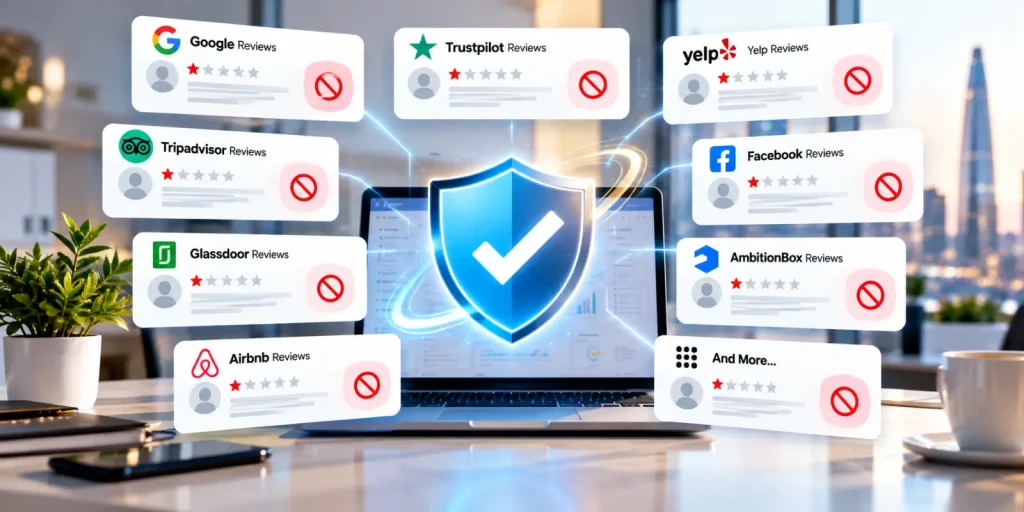
Very few businesses have a problem on a single site. A damaging review gets quoted, screenshotted or syndicated, and within weeks the same complaint is visible in three places while your own website sits below all of them. Treating each platform as a separate project is what makes review removal slow and expensive. We run them as one case, because the evidence that proves a review is fake on Google is usually the same evidence that proves it on Trustpilot.
Google Business Profile
Google review removal is where most cases start, because the rating shows beside your business name in search and on Maps. We file against the prohibited and restricted content policies rather than arguing the review is unfair.
Trustpilot and Feefo
Trustpilot review removal turns on whether the reviewer had a genuine service experience. We assemble the transaction record, flag it through the business route, and follow the verification request through to a decision.
Yelp and Tripadvisor
The most resistant platforms. Yelp review removal needs a clean Content Guideline breach or a documented conflict of interest — nothing else moves it — and Tripadvisor works much the same way.
Glassdoor and Indeed
Employer review removal has its own rules. These sites assess a report against the single guideline you cite, which makes the choice of ground the whole submission. We also run a dedicated employer review service.
Facebook and social
Recommendations and page reviews are governed by Community Standards. Coordinated one-star campaigns often fail on inauthentic behaviour grounds even when a single review would survive.
Marketplaces and trade sites
Amazon, Booking.com, Checkatrade, Bark and the industry directories that rank for your name. Smaller sites are frequently easier to clear, and they are the ones most businesses forget to check.
1-Star Review Removal Service — linkremovalfromsearch.com
Short answer: A 1-star review removal service that charges only when the review actually comes down. You send us the link, we tell you which policy ground applies and what it will cost, and you pay nothing unless it is removed. Most cases finish inside ten days.
We have been removing online content since 2001, for clients in more than 60 countries. What businesses buy from us is not a report-filing service — anyone can press the flag button. What they buy is the judgement about which ground will succeed, the evidence package that makes it checkable, and the escalation route when the first answer is no.
Business Reputation & Review Removal Service — Worldwide Help
Short answer: We take business reputation and review removal cases in more than 60 countries, in English and in local language where the platform requires it. Jurisdiction matters, because the legal routes that back up a refused report differ sharply between the United States, the UK and the EU.
Online reputation management is usually sold as a suppression exercise — publish enough new content and push the bad result down. That is slow, it is expensive to maintain, and the review is still there for anyone who scrolls. Our approach is the opposite: remove the content at the source, then clear the URL from Google and the AI answers that quote it. Suppression is what we recommend only when removal is genuinely not available.
United States
Platforms are broadly shielded from liability for what users post, so a defamation claim runs against the author rather than the review site. Removal therefore comes through the platform policy route in almost every case.
United Kingdom
Defamation and malicious falsehood both apply, and a pre-action letter to an identifiable author carries real weight. Where the author is anonymous, the platform ground remains the faster path.
European Union
Data protection and the right to erasure give additional leverage, particularly where a review names an individual rather than a company. The Digital Services Act has also tightened how quickly platforms must handle notices.
Everywhere else
Gulf states, Canada, Australia, Singapore, Japan and beyond — we work to the platform rules first, and bring in local counsel only when a case genuinely needs it.
Confidential by default
NDA on request. No business we work for is ever named as a case study, and nothing we file requires you to acknowledge the review publicly.
Same terms everywhere
No win, no fee applies whatever the country and whatever the platform. If the review is not removed, you do not pay.
Fake 1-star review removal — your questions
Short answer: A fake 1-star review comes down when you can point at the rule it breaks and hand the platform the evidence. Below are the questions businesses ask us most, answered without the hedging.